
How AI Tools Are Transforming and Automating Digital Marketing Services in 2026

Artificial intelligence is no longer experimental. It is actively shaping how modern digital marketing services operate.
This shift is not about generative AI or content creation alone. It is about how AI tools are automating key marketing tasks across SEO, PPC, content workflows, and analytics.
Work that once required hours of manual research can now be analysed in minutes. Teams gain faster visibility into what is working and where campaigns need attention.
AI tools strengthen strategic expertise rather than replacing it. It gives teams clearer insight into search performance and helps sharpen paid strategy. It also makes performance data easier to interpret.
In this guide, we explore how AI is reshaping digital marketing services and where human expertise continues to make a difference.
The Rise of AI Marketing Tools
AI marketing tools have developed quickly over the last few years. Many platforms now integrate machine learning directly into advertising management systems. Reporting dashboards are becoming far more intelligent. AI tools are also becoming part of more editorial and campaign workflows.
These systems analyse patterns across large datasets and surface insights that would be difficult to detect manually. Marketers can see performance signals earlier and respond while activity is still unfolding.
In practice, this changes how teams allocate their time. Instead of spending hours analysing reports, they can focus on interpreting insights and refining strategy.
For agencies and in-house teams delivering digital marketing services, these tools also make it easier to analyse activity performance and identify areas for improvement.
Modern AI marketing tools now support several important tasks, including:
- Keyword and search trend analysis
- Automated ad optimisation and bid management
- Content research and topic generation
- Predictive audience segmentation
- Data modelling and performance forecasting
These capabilities support the work, but strategy still comes from people who understand the objective behind the work.
How AI Is Changing SEO Strategy
Search engine optimisation has always relied heavily on data. AI automation tools now make that information far easier to analyse, allowing teams to identify opportunities and adjust strategy much faster. Many agencies now incorporate AI into their optimisation processes as part of modern AI SEO services.
Modern AI SEO tools can review large websites in minutes and highlight areas that need attention, supporting more efficient search engine optimisation services. They surface gaps in keyword coverage and flag technical issues that affect visibility.
AI is also improving how teams understand search behaviour. Instead of reviewing keywords one by one, many platforms now group related queries together. This helps strategists plan content around topics rather than isolated keywords.
AI PPC Automation and Paid Media

Paid advertising teams have been among the first teams to adopt AI tools. Platforms such as Google Ads and Meta already rely heavily on machine learning to optimise campaigns while they run, particularly in modern PPC management services.
AI PPC automation allows systems to analyse paid media data at scale and adjust bidding behaviour based on performance signals. This helps teams respond faster when performance signals shift.
However, automation still requires experienced oversight. Goals and audience targeting need to be shaped by people who understand the strategy behind the work. AI improves efficiency, but strong paid media performance still depends on human judgement.
AI Content Writing and Content Marketing
Content creation has also shifted with the rise of AI writing tools, which now play a role in many SEO content strategies. These systems are now part of many editorial workflows.
AI for Content Research
AI tools can analyse large volumes of search data and competitor content in seconds. This helps marketers understand search intent and uncover gaps that are worth addressing in new content.
AI for Drafting and Structure
AI can also assist with early-stage drafting. Some tools generate outlines or suggest headings. Others help structure articles using search data.
Writers get a framework to refine ideas and shape the narrative, rather than starting from scratch.
AI for Editing and Refinement
Editing is another area where AI tools provide value. Many platforms now offer grammar suggestions and readability checks to help writers polish their content before publication.
Editing still requires human judgement to maintain brand voice and shape an authentic message.
AI supports editorial workflows by automating tasks, while strong content depends on experienced writers who understand the audience and communicate clearly.
AI Analytics and Marketing Insights
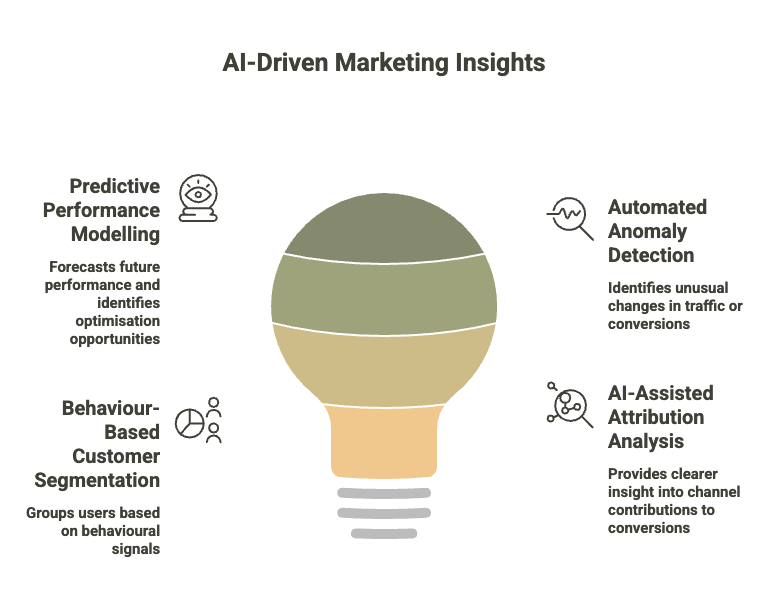
One of the most valuable applications of AI in marketing is analytics. Modern data platforms now use machine learning to analyse performance patterns and surface insights that would be difficult to detect manually.
AI-driven analytics tools allow marketers to move beyond simple reporting. Instead of focusing solely on past performance, teams can identify emerging trends and respond earlier as performance begins to shift.
- Predictive performance modelling: AI can analyse historical paid media data to forecast potential performance outcomes and identify optimisation opportunities.
- Automated anomaly detection: Analytics platforms can identify unusual changes in traffic or conversions, helping marketers investigate issues before they impact results.
- Behaviour-based customer segmentation: AI tools can group users based on behavioural signals, giving teams deeper insight into how different audiences interact with campaigns.
- AI-assisted attribution analysis: Machine learning models can analyse marketing touchpoints to provide clearer insight into how different channels contribute to conversions.
These insights help specialists act earlier and make smarter strategic decisions.
The Limitations of AI Tools in Digital Marketing
AI tools offer clear advantages but have limitations. Marketing still depends on understanding the audience and brand context.
AI systems rely heavily on data. When that data is incomplete or biased, the insights they produce can also be flawed.
Some limitations businesses should keep in mind include:
- AI cannot replace brand storytelling or creative thinking.
- Automated recommendations may not align with business goals.
- Over-reliance on automation can reduce performance control.
The most effective digital marketing services combine AI tools with experienced specialists. Technology supports, but people drive the strategy.
That balance is what separates useful AI adoption from lazy automation.
Turn AI Insights Into Strategy With Druce Digital
At Druce Digital, AI tools enhance how we deliver digital marketing services. It helps us analyse performance faster and spot opportunities earlier.
But tools don’t run campaigns. People do. Our team turns those insights into a strategy that drives real business results.
Curious how we use AI in real campaigns? We’ll show you where it adds value and where strategy still leads. Book a strategy call today.