
Building an online store has never been easier. Sustaining growth is what sets successful businesses apart.
Paid advertising drives immediate results, but it shouldn't be your entire strategy. The businesses that succeed are the ones customers keep finding, long after a campaign has ended.
E-Commerce SEO makes that possible by positioning your business when search intent is strongest. The sections below explore why that creates a lasting competitive advantage.
Your online store can become one of your most valuable business assets. Strategic E-Commerce SEO strengthens that asset, increasing the contribution your website makes to marketing performance and sustainable business growth.
Organic search connects your business with people who have genuine purchase intent. Every visit creates an opportunity to build trust and turn interest into sales.
Search engines reward websites that provide relevant content and a positive user experience. Better search performance creates more opportunities to reach customers who are ready to buy.
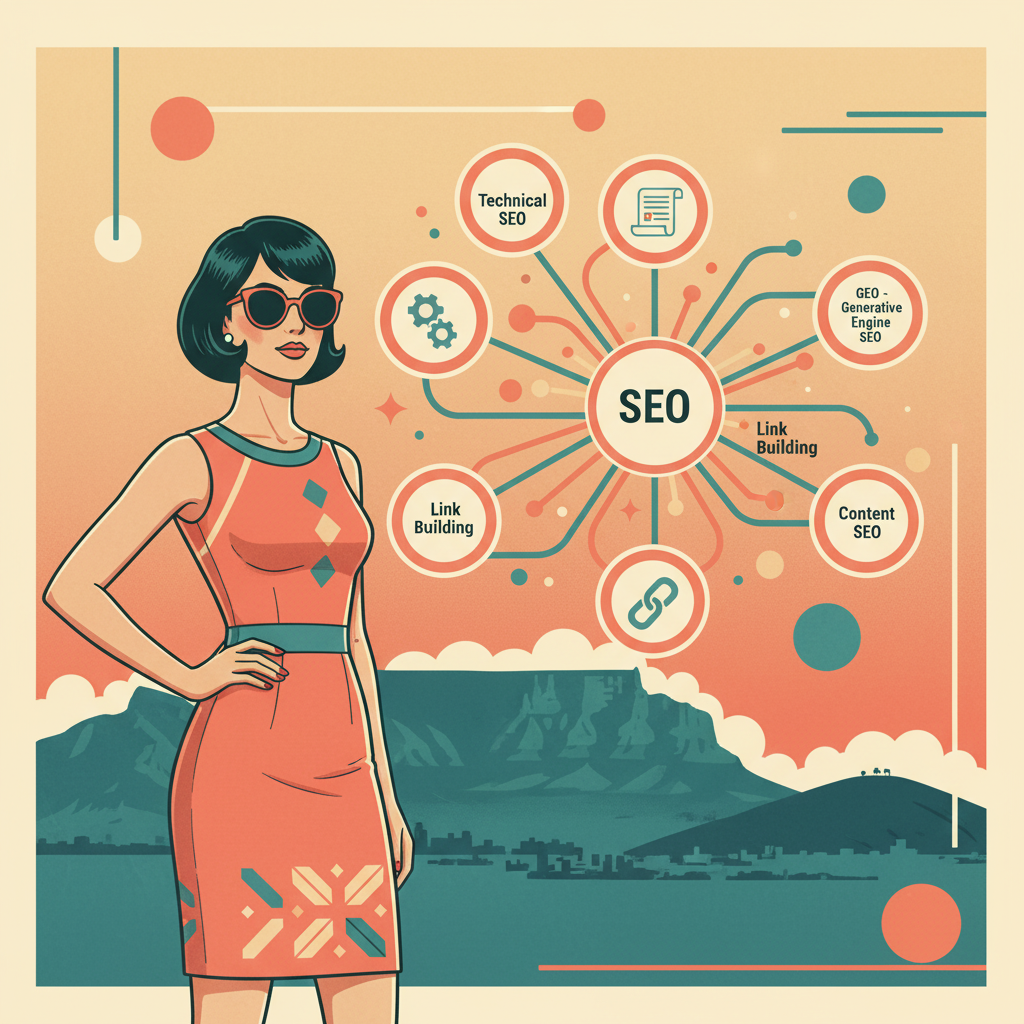
Scalability ensures your online store continues performing as it expands. A scalable E-Commerce SEO strategy connects site structure, content and technical performance, keeping every new product, category and page aligned with your existing SEO.
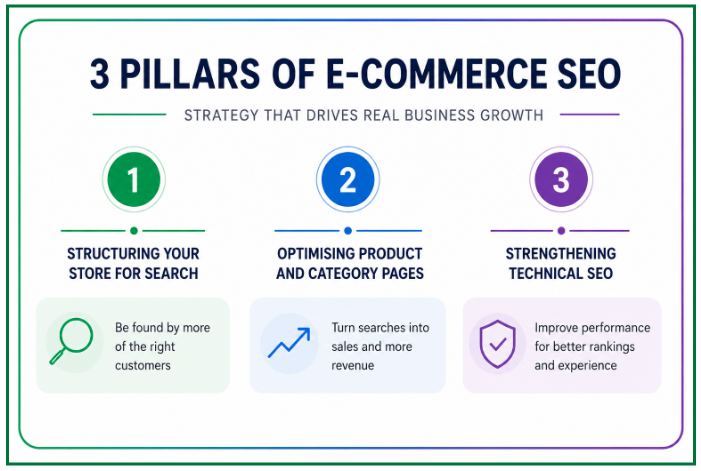
Clear categories and intuitive navigation help customers find products more quickly while strengthening SEO for E-Commerce websites.
Internal linking guides customers naturally towards related products while helping search engines understand how your pages connect.
Product and category pages should answer customer questions as clearly as they answer search intent. Every page should earn its place in search by giving customers a reason to stay, compare and buy. Category pages provide the context customers need to compare options before choosing the right product.
Technical performance influences every page on your website. Fast-loading pages, mobile usability and structured data improve how search engines crawl, index and understand your online store.
Make these priorities part of every E-Commerce SEO decision:
- Clear website architecture
- Optimised category pages
- Customer-focused product content
- Strategic internal linking
- Technical SEO
- Continuous performance monitoring
The best keywords aren't always the ones with the highest search volume. They're the ones your customers actually use.
Effective E-Commerce keyword research starts with understanding why customers search, not simply what they search for. Matching your content to that intent attracts more qualified visitors and creates stronger opportunities to convert.
Every search creates a different opportunity:
Search Intent | Customer Goal | Best Content Type |
|---|---|---|
Informational | Learn about a topic | Blog articles |
Commercial | Compare products | Category pages |
Transactional | Purchase a product | Product pages |
Branded | Find a specific brand or retailer | Brand and collection pages |
Search performance depends on more than keywords. Every part of your website contributes to how customers experience your online store, from the way pages are organised to how quickly they load.
Better optimisation creates better outcomes for both search engines and customers. Faster pages and intuitive navigation reduce friction, helping more visitors become customers.
Shopify provides many of the tools needed for SEO, but the way you configure and maintain them determines how effectively SEO for E-Commerce websites performs in practice and how easily customers find your online store.
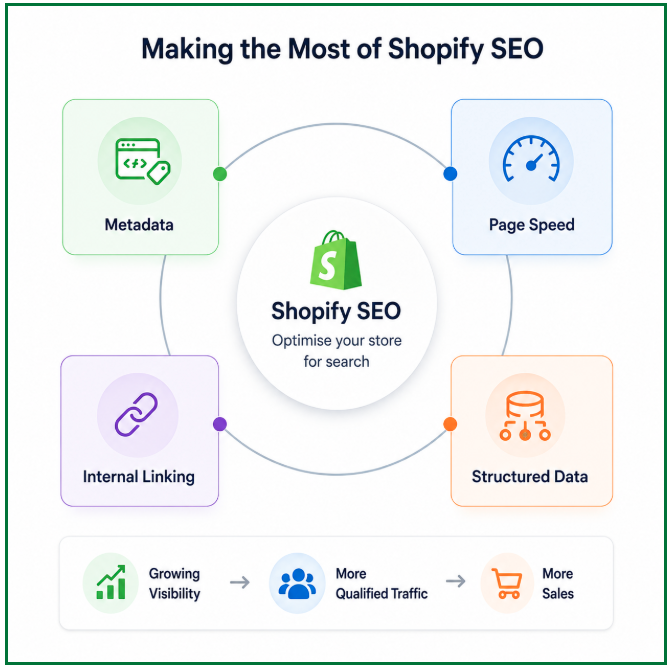
Ongoing Shopify SEO optimisation combines content improvements with technical enhancements, including page speed, metadata, internal linking and structured data, helping your online store perform more effectively. Every new page is another opportunity to strengthen your visibility in search.
Start with the fundamentals that support long-term search performance:
- Improve page speed
- Optimise images
- Write compelling metadata
- Strengthen internal linking
- Improve mobile usability
- Implement structured data
Rankings matter, but they don't tell you everything.
Qualified organic traffic, keyword visibility, conversions and revenue provide a clearer picture of how your SEO strategy contributes to business growth.
Performance data should shape your next decision. Regular analysis reveals where to optimise for stronger business results.
The best SEO decisions come from understanding why performance changes, not simply tracking the numbers. Regular reviews reveal new opportunities and keep your strategy aligned with customer behaviour and business goals.
Growth follows businesses that keep optimising.
A successful E-Commerce SEO strategy is built on informed decisions. These answers cover some of the most common questions online store owners ask before taking the next step.
E-Commerce SEO improves an online store's visibility in search engines through technical optimisation, high-quality content and user experience, helping attract qualified organic traffic.
SEO helps customers find your products when they're actively searching for them. Unlike paid advertising, organic visibility continues generating traffic over time, making SEO a valuable long-term investment.
Yes. Shopify includes built-in SEO features, but achieving strong results still requires ongoing optimisation, quality content and a considered Shopify SEO strategy.
It starts by understanding your customers. Create content around the words and phrases they use throughout the buying journey, then match each page to the right search intent.
Every search is an opportunity to reach a customer looking for exactly what you sell. A clear SEO strategy helps your online store appear at the right moments, creating more opportunities to attract customers, increase sales and grow your business.
When you're ready to turn your online store into a stronger driver of business growth, speak to Druce Digital about creating an E-Commerce SEO strategy tailored to your business.