Meta Ads Services: Full-Funnel Marketing Strategy
Druce Digital
Paid Media Specialist
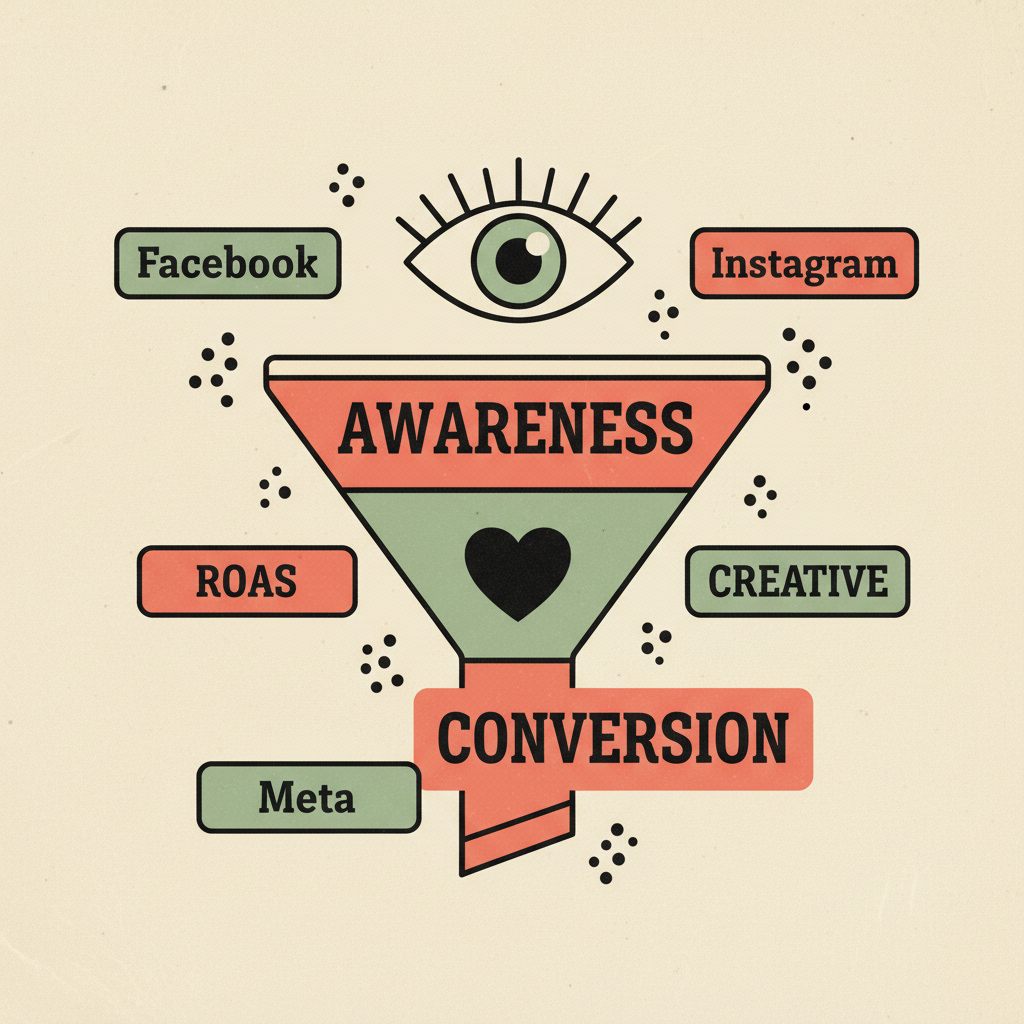
Meta Ads play a valuable role in how people discover, evaluate and engage with brands — but not in the oversimplified way most agencies sell it. While Meta can generate strong lead volumes, rapid visibility and wide audience reach, businesses need a realistic understanding of its capabilities, limitations and the strategic thinking required to make it work properly.
Meta Ads shouldn't be your entire strategy. It should be a well-engineered part of a broader ecosystem that includes Google Ads for high-intent search, SEO for long-term organic health and strategically aligned paid media campaigns that drive full-funnel impact.
Understanding How Meta Ads Actually Work
Meta is an audience-first platform. Unlike search advertising, where people actively look for what they want, Meta captures people based on who they are, what they're interested in and how they behave online.
What Makes Meta Powerful
- ✓ Generates visibility & sparks interest
- ✓ Captures behavior-based audiences
- ✓ Reaches people not actively searching
- ✓ Enables precise audience segmentation
Important Limitations
- ⚠ Lead quality varies more than intent-driven channels
- ⚠ Requires behavioral expertise, not just setup
- ⚠ Works best as part of a multi-channel strategy
- ⚠ Needs deep sales alignment to measure true ROI
Meta's real value isn't in how many leads it generates. It's in how many of those leads turn into meaningful revenue.
Why Behavioral Science Matters in Meta Advertising
Cognitive Biases
Influence attention and decision-making
Emotional Triggers
Drive engagement and interest
Motivations & Objections
Shape customer behaviour
Creative Formats
Impact how users react
Repetition & Consistency
Build trust through familiarity
Effective Meta campaigns are built around psychology, not just demographics. It takes a very specific skill set to interpret behavioural patterns, build audience frameworks and translate that into creative that genuinely converts. Real performance also depends on the ability to analyse data accurately and report on what's actually driving revenue.
Where Meta Fits Into the Funnel
Awareness (TOFU)
I don't know you yet.
Reach, exposure, scroll-stopping creative
Recognition & interest
CPM, engagement, view-throughs
Consideration (MOFU)
I'm interested, but not convinced.
Education, trust building, repeated messaging
Warm traffic, higher intent signals
CTR, add-to-carts, lead form opens
Conversion (BOFU)
I'm ready to take action.
Retargeting, offer-driven ads, clear CTA
High-quality leads or sales
CPA, ROAS, lead quality, POAS
Retention (Loyalty)
I've purchased before.
Cross-sell, upsell, retention content
Repeat customers & higher LTV
LTV, repeat purchase rate, blended ROAS
Meta Is Not Your Whole Strategy
Meta is influential, but it's not meant to stand alone. It performs best when paired with other channels that balance its strengths.
Meta Ads
Audience reach & behaviour-based targeting
Google Ads
Intent-driven search capture
SEO
Long-term organic visibility
When these channels support each other, you get a complete system rather than isolated tactics. Meta creates demand by capturing attention from people who weren't actively looking. Google Ads then captures that demand, and SEO strengthens visibility throughout the entire research phase.
Profitability Matters More Than Single Metrics
❌ Surface-Level Metrics
- • CPL (Cost Per Lead) alone
- • ROAS without profitability
- • High volume, low quality leads
- • Campaign-level metrics disconnected from sales
✅ Real Performance Metrics
- • Profit on ad spend (POAS)
- • Lifetime value (LTV)
- • Lead quality & qualification rates
- • Sales conversion aligned with marketing
Why Businesses Need Expert Meta Ads Management
Success requires far more than campaign setup and budget optimization.
Agencies that don't consider sales data or profitability tend to optimize for volume, and volume without relevance is expensive. Real expertise lies in aligning marketing performance with business outcomes and knowing how to shape Meta's broad reach into something precise, efficient and commercially valuable.